
Life Sciences Communication
Life sciences communication is the intersection of science, media, and society
Life sciences communication is one of the world’s leading science communication programs and integrates science, media, and society with effective communication strategies.
As a Life Sciences Communication major you will:
- Develop communication skills such as strategic communication, writing, marketing, visual communication, or digital media
- Explore how communication strategies vary across print, audio, video, and web multimedia platforms
- Learn how to effectively communicate complex science topics in areas such as disease outbreaks, gene editing, environmental and natural resources, agriculture, artificial intelligence, and more
*The Life Sciences Communication BS is being renamed Science Communication BS. Students will be able to earn a Life Sciences Communication BS through the end of Summer 2027. Beginning in Fall 2027, the program awarded will be the Bachelor of Science in Science Communication.
Career Paths
Life sciences communication graduates are prepared for positions in communications, digital marketing, environmental advocacy, and research or consulting in a variety of industries including health care, media, education, agriculture, information technology, and life sciences.
Here are just a few examples of what our life sciences communication graduates are doing with their careers:
What CALS alumni do:
PR Manager
Digital Marketing Specialist
Inside Sales Coordinator
Marketing Manager
Business Operations Analyst
Communications Consultant
Farm Broadcaster
Where CALS alumni work:
Amazon
American Family Insurance
Bader Rutter
Midwest Farm Report
Colle+McVoy
What CALS alumni do:
Communication Specialist
Account Manager
Project Manager
Marketing Specialist
Business Operations Analyst
Scientific Writer
Program Manager
Where CALS alumni work:
Thermo Fisher
Boston Scientific
Exact Sciences
Promega
Alta Genetics
U.S. Environmental Protection Agency
What CALS alumni do:
Project Manager
Production Coordinator
Marketing Specialist
Where CALS alumni work:
Molson Coors
Saputo Cheese
Kraft Heinz
What CALS alumni do:
Healthcare Recruiter
Marketing Specialist
Account Manager
Where CALS alumni work:
Epic
National Institute of Health
Medical College of Wisconsin
SSM Health
Community Health Systems
Wisconsin Department of Health Services
Your CALS Experience
Learn through hands-on experiences

Work directly with a client and solve real world problems in a number of life sciences communication classes. Past classes have created website redesign plans for the UW–Madison Arboretum, designed a COVID-19 vaccination campaign for University Health Services, and more.
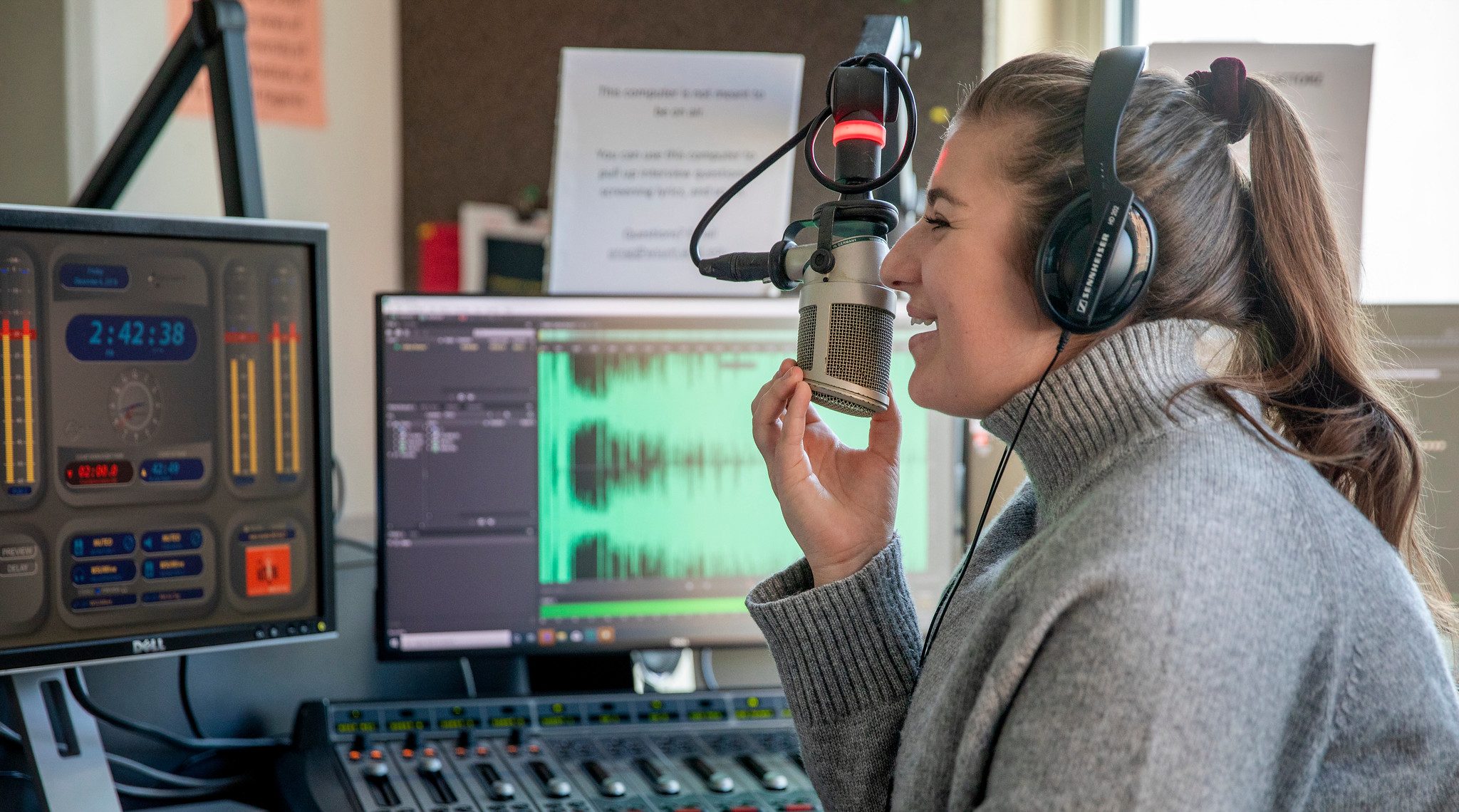
Develop your multimedia skills through video, photography, digital design, and radio courses and use top of the line equipment such as radio labs, video production equipment, and professional editing software.
90%
Students who complete an internship
39%
Students who participate in research
50%
Students who pursue a double major or certificate
Advisor & Contact Information
Advisors can answer your questions, help you create a degree plan that meets your personal and professional goals, and connect you to resources across the UW–Madison campus.
Incoming students should reach out to CALS Academic Affairs to direct your questions. Current UW–Madison students should schedule with their assigned advisor using Starfish.
CALS Academic Affairs
116 Agricultural Hall
1450 Linden Dr., Madison, WI 53706
academicaffairs@cals.wisc.edu
(608) 262-3003
Life Sciences Communication Advising
Hiram Smith Hall
1545 Observatory Drive, Madison, WI 53706
lifescicomm@cals.wisc.edu
(608) 262-1464
